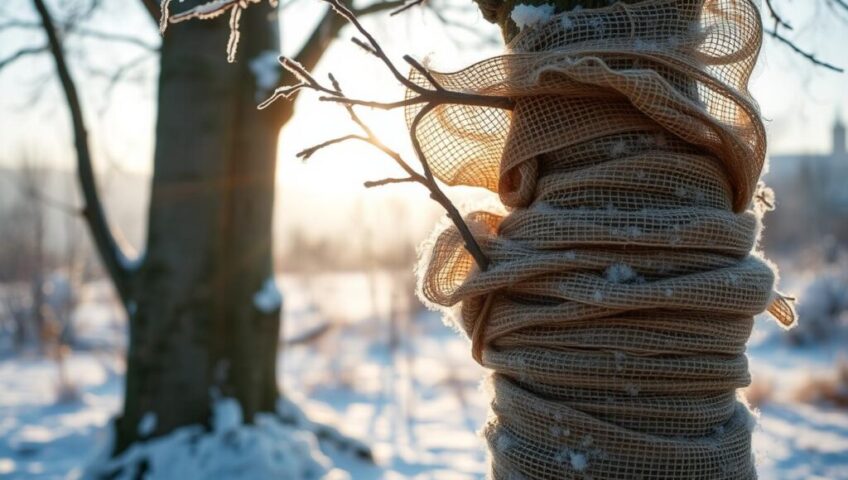
When Minnesota’s winter rolls in, temperatures drop, snow piles high, and most homeowners assume their trees are fine on their own. But beneath the frost and snow, your trees could be struggling, their bark cracking, roots freezing, and moisture slowly draining away.
Properly wrapping your trees before the worst of winter sets in is one of the simplest and most effective ways to protect them. Whether you’re caring for a newly planted sapling or a young maple in your yard, understanding how to wrap trees for winter can mean the difference between spring growth and winter damage.
At Dynasty Tree Experts, our certified arborists in Minnetonka, MN, help homeowners across the Twin Cities protect their landscapes year-round. Here’s everything you need to know about wrapping your trees for winter, the right way.
Why Tree Wrapping Matters in Winter
Minnesota’s extreme cold and fluctuating temperatures can wreak havoc on your trees. During sunny winter days, the bark heats up and expands; at night, it rapidly cools and contracts, causing sunscald or frost cracks.
Wrapping your trees helps:
- Prevent bark cracking and sunscald caused by temperature swings
- Shield young bark from salt, wind, and ice damage
- Deter pests and rodents that chew on soft bark in winter
- Preserve moisture and protect tender tissue on young trees
Even mature trees benefit from proper protection during especially harsh winters. It’s a small investment that safeguards your landscape, and your home’s curb appeal.
When to Wrap and Unwrap Trees
Timing is everything when protecting trees in cold climates like Minnetonka and the Twin Cities.
When to Wrap:
- Late fall, typically after leaves have dropped but before the first deep freeze (around November).
- Focus on young, thin-barked trees such as maples, lindens, crabapples, and fruit trees.
When to Unwrap:
- Early spring, once freezing nights are consistently above 32°F.
- Leaving wraps on too long can trap moisture, invite mold, or harbor insects.
Pro Tip from Dynasty Tree Experts: Mark your calendar to remove wraps in April, or earlier if you notice consistent thawing days.
Materials You Can Use to Wrap Trees
Choosing the right wrapping material matters just as much as timing. The goal is insulation, not suffocation.
Best Materials:
- Commercial tree wrap (paper, crepe, or fabric): Designed for breathability and protection.
- Burlap strips or sheets: Excellent for insulation and airflow.
- Kraft paper wrap: A biodegradable and affordable option for young trees.
Avoid:
- Plastic or vinyl wraps, they trap moisture and cause bark decay.
- Tight bindings or rope that constrict trunk growth.
To add extra protection, apply 2–4 inches of organic mulch around the base of your tree (but keep it 3–4 inches away from the trunk). Mulch insulates roots and retains moisture throughout the cold months.
Step-by-Step: How to Wrap Your Trees for Winter
Protecting your trees doesn’t have to be complicated. Here’s how to wrap trees properly for maximum winter defense:
- Clean and inspect the trunk: Make sure the bark is dry and free from damage or fungus.
- Start at the base: Begin wrapping just above the soil line.
- Overlap the wrap: Spiral upward with a one-third overlap until you reach the lowest branches.
- Secure the top: Use twine or biodegradable tape to hold it in place.
- Check for gaps: Ensure no open areas where wind or pests can enter.
- Inspect periodically: After heavy snow or thaw, check that the wrap is still secure and dry.
Bonus Tip: For young trees in exposed or windy areas, consider using burlap shields or tree guards to further protect them from salt spray and freezing winds.
Common Wrapping Mistakes to Avoid
Even well-intentioned homeowners sometimes make errors that do more harm than good. Avoid these common tree-wrapping pitfalls:
- Wrapping trees too tightly prevents proper airflow and can cause rot.
- Leaving wraps on too long leads to trapped moisture and pest infestations.
- Using plastic wraps locks in condensation, damaging bark.
- Ignoring soil insulation, skipping mulch exposes roots to temperature extremes.
- Forgetting older trees, mature trees may still need protection, especially during unusually dry or cold winters.
Which Trees Benefit Most from Wrapping?
Not all trees need wrapping, but the following species are most vulnerable in Minnesota’s winters:
- Young maples and lindens (thin bark)
- Fruit trees like apple, cherry, and crabapple
- Aspens and birches (prone to sunscald)
- Recently transplanted trees or trees near roads (exposed to salt spray)
If you’re unsure whether your tree needs wrapping, our arborists can assess its health and exposure to recommend the best care plan.
Beyond Wrapping: Complete Winter Tree Care Tips
Tree wrapping is just one piece of the winter care puzzle. For a fully protected landscape, pair wrapping with:
- Proper winter watering (on mild days above 40°F)
- Mulching around root zones
- Pruning dead or weak branches before snowfall
- Monitoring for pests and fungal growth
Combining these practices ensures your trees stay healthy, hydrated, and ready for vigorous spring growth.
FAQs About Tree Wrapping
Q1: Should I wrap all my trees every winter?
No, focus on young or thin-barked trees that are more sensitive to winter sun and cold. Mature trees usually have thicker bark and natural insulation.
Q2: Can wrapping prevent salt damage from roads?
Yes. Burlap wraps or shields can protect bark from salt spray, especially for trees near driveways or streets.
Q3: What happens if I leave tree wrap on too long?
It can trap moisture, encourage mold or insect infestation, and cause bark decay. Always remove wraps in early spring.
Protect Your Trees This Winter with Dynasty Tree Experts
Minnesota winters are tough, but your trees don’t have to suffer. Proper wrapping, watering, and care can make all the difference between a thriving spring canopy and costly damage.
At Dynasty Tree Experts, our certified arborists provide professional winter tree care across Minnetonka and the Twin Cities. From wrapping and trimming to storm damage prevention, we help your trees stay strong and beautiful year-round.